Blog
Insights on Medical 3D Printing
Clinical perspectives, technical deep-dives, and surgical case reports from the Osteo3d team.
 Virtual Surgical PlanningMaxillofacial Surgery
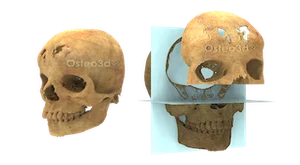
Recentring the Face: Virtual Surgical Planning for Skeletal Asymmetry Correction
A patient with skeletal jaw asymmetry and chin deviation required precise, three-dimensional planning before surgery could begin. Virtual surgical planning, anatomical models, and patient-specific guides translated the digital correction into the operating room.
Osteo3d Team15 February 2026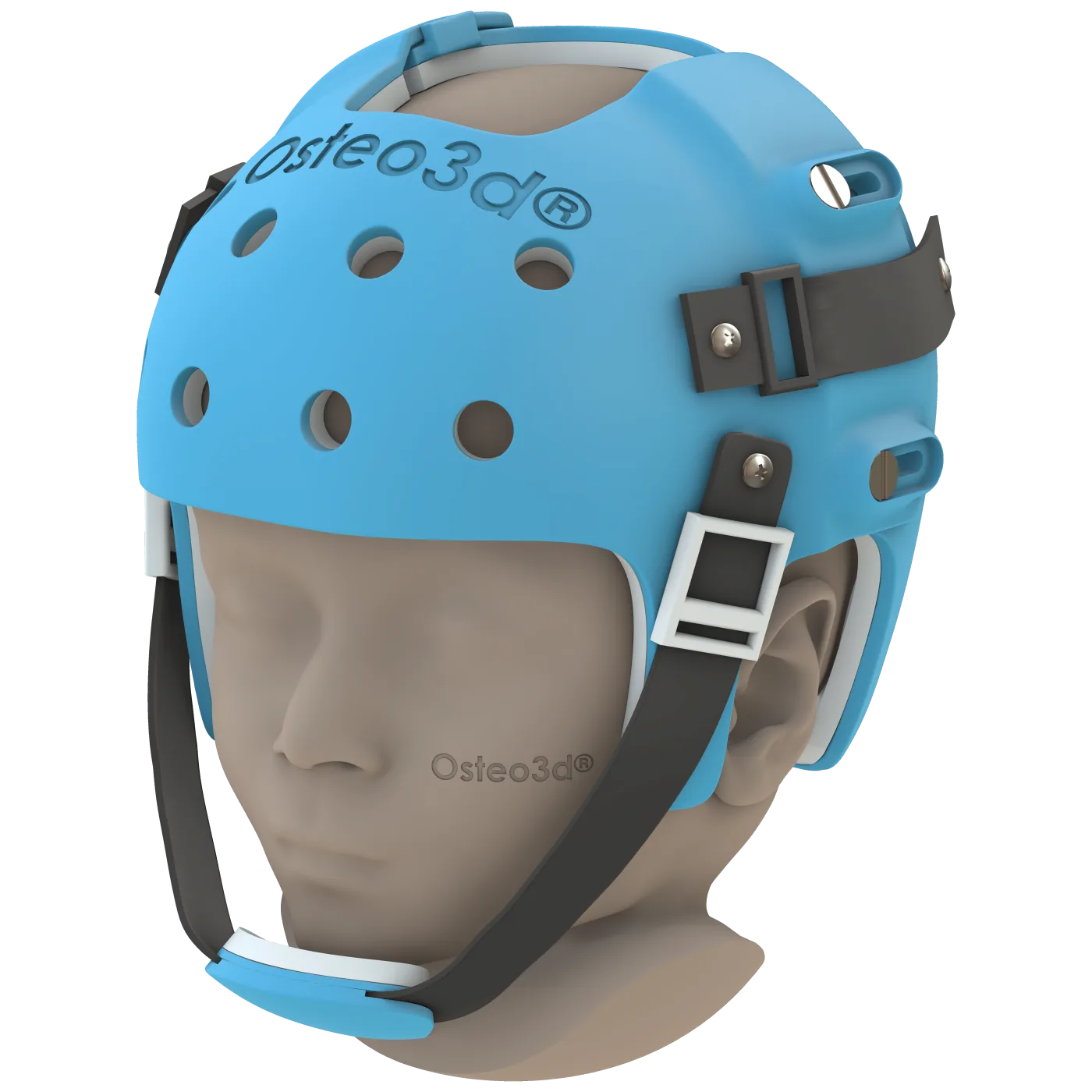 Medical ModelsNeurosurgery
Guiding the Growing Skull: Sequential Cranial Helmets After Craniosynostosis Surgery
After craniosynostosis correction surgery, an infant required post-operative cranial remoulding therapy to guide skull symmetry. Two sequential custom helmets, each designed from the child's updated head geometry, directed growth across a six-month course as the skull rapidly expanded.
Osteo3d Team26 December 2025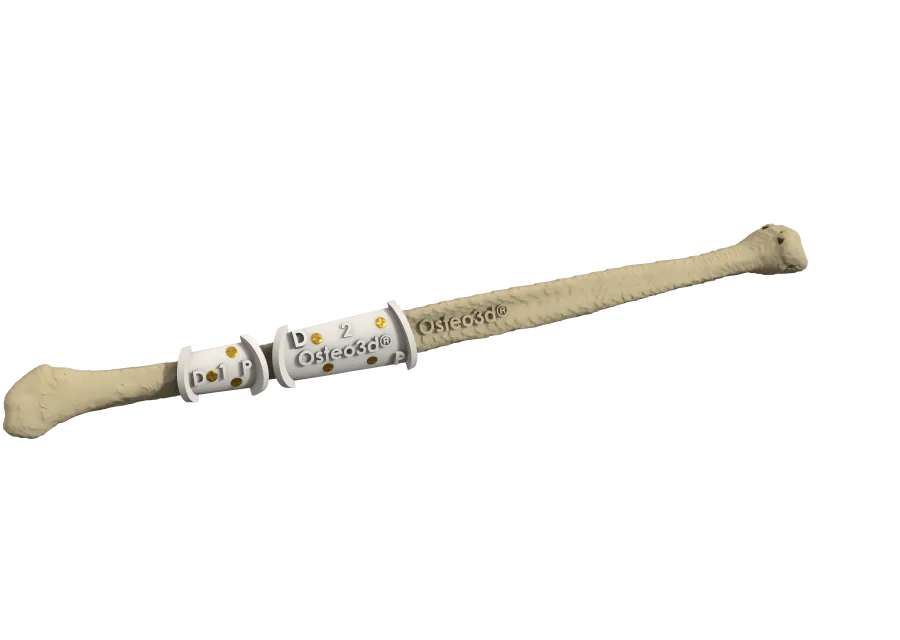 Virtual Surgical PlanningMaxillofacial Surgery
Rebuilding the Mandible: Planning for a Challenging Reconstruction
A large intraosseous tumour had expanded to nearly 8 cm within the mandible, distorting the entire jaw architecture. Virtual surgical planning and patient-specific cutting guides gave the surgical team a precise reconstruction before the procedure began.
Osteo3d Team5 March 2025- ResearchMaxillofacial Surgery
Reading the Jaw Before the Extraction: What Mandibular Flare Reveals About Lingual Cortex Thickness
A retrospective study of 26 orthognathic surgery patients used Osteo3d software to process CT data and measure mandibular dimensions. The finding carries direct implications for third molar extraction safety: in skeletal Class III patients, increased mandibular flare correlates with a thinner lingual cortical plate.
Osteo3d Team31 July 2024 - Medical ModelsHepatobiliary Surgery
Seeing Inside a Liver Before the Incision: How a 3D Printed Model Guided a Complex Hepatic Resection
A large tumour in the right lobe of the liver sat close to major hepatic vessels. A 3D printed model of the liver — with tumour, veins, and bile ducts rendered in a single physical object — showed the surgical team what two-dimensional imaging could not.
Osteo3d Team14 November 2017 - Medical ModelsNeurosurgery
Mapping the Unmappable: 3D Templates and Molds for a Skull-Base Tumour with Intracranial Extension
A massive ameloblastoma had grown through the skull base into the frontotemporoparietal region, displacing brain tissue and shifting the midline. Osteo3d digitally mapped the tumour, fabricated a patient-specific resection template, and produced custom 3D molds for PMMA bone cement reconstruction of the defect.
Osteo3d Team30 December 2021 - Medical ModelsNeurosurgery
Rehearsing the Impossible: 3D Printed Brain and Skull Models in the Separation of Craniopagus Twins
Two conjoined twins, joined at the head and sharing a venous drainage system, underwent India's first successful craniopagus separation at a major public hospital in Delhi. The neurosurgical team rehearsed the procedure on 3D printed models of the brain and skull before a single incision was made.
Osteo3d Team25 October 2017 - Virtual Surgical PlanningMaxillofacial Surgery
Aligning Two Jaws at Once: Virtual Surgical Planning for a Bimaxillary Osteotomy
Correcting a severe skeletal malocclusion requires moving both jaws simultaneously — and getting the relationship between them exactly right. Virtual surgical planning and patient-specific surgical guides eliminated the guesswork from a procedure that has none to spare.
Osteo3d Team22 August 2016 - Medical ModelsNeurosurgery
Shaping a Skull: How a 3D Printed Helmet Guided Cranial Development After Craniosynostosis Surgery
In craniosynostosis, the bones of a baby's skull fuse too early, forcing abnormal head growth. After surgery to release the fused suture, a custom 3D printed helmet guides the skull as it expands into a normal shape. The helmet that fits precisely — designed from the child's own anatomy — performs differently from one that does not.
Osteo3d Team7 March 2016 - Virtual Surgical PlanningMaxillofacial Surgery
Contouring a Jaw in the Operating Room: How 3D Printing Changed the Calculation
Mandibular reconstruction using a fibula free flap demands that a straight bone from the lower leg be contoured to match the curved geometry of the jaw — precisely, under time pressure, in the OR. A 3D printed model changed what was possible.
Osteo3d Team9 January 2015 - Medical ModelsMaxillofacial Surgery
Secondary Reconstruction After Radiation: A Patient's Journey Back
A young patient refused immediate jaw reconstruction after tumour removal. Radiation left his face severely deformed. Years later, a 3D printed model of his upper jaw defect became the foundation for a complex microvascular secondary reconstruction.
Osteo3d Team9 January 2015 - Medical ModelsMaxillofacial Surgery
Restoring a Face: How a 3D Printed Jaw Model Made an Impossible Obturator Possible
A patient with cancer of the upper jaw could not be fitted with an obturator by any dentist because of radiation-induced trismus. A 3D printed model of his jaw changed that — and gave him back his speech, his smile, and his life.
Osteo3d Team16 October 2014
Ready to Start Your Case?
Upload your medical imaging data securely and our team will get back to you promptly.