Morphometric and Measurement Studies
Distances, angles, volumes and asymmetry, measured on 3D anatomy
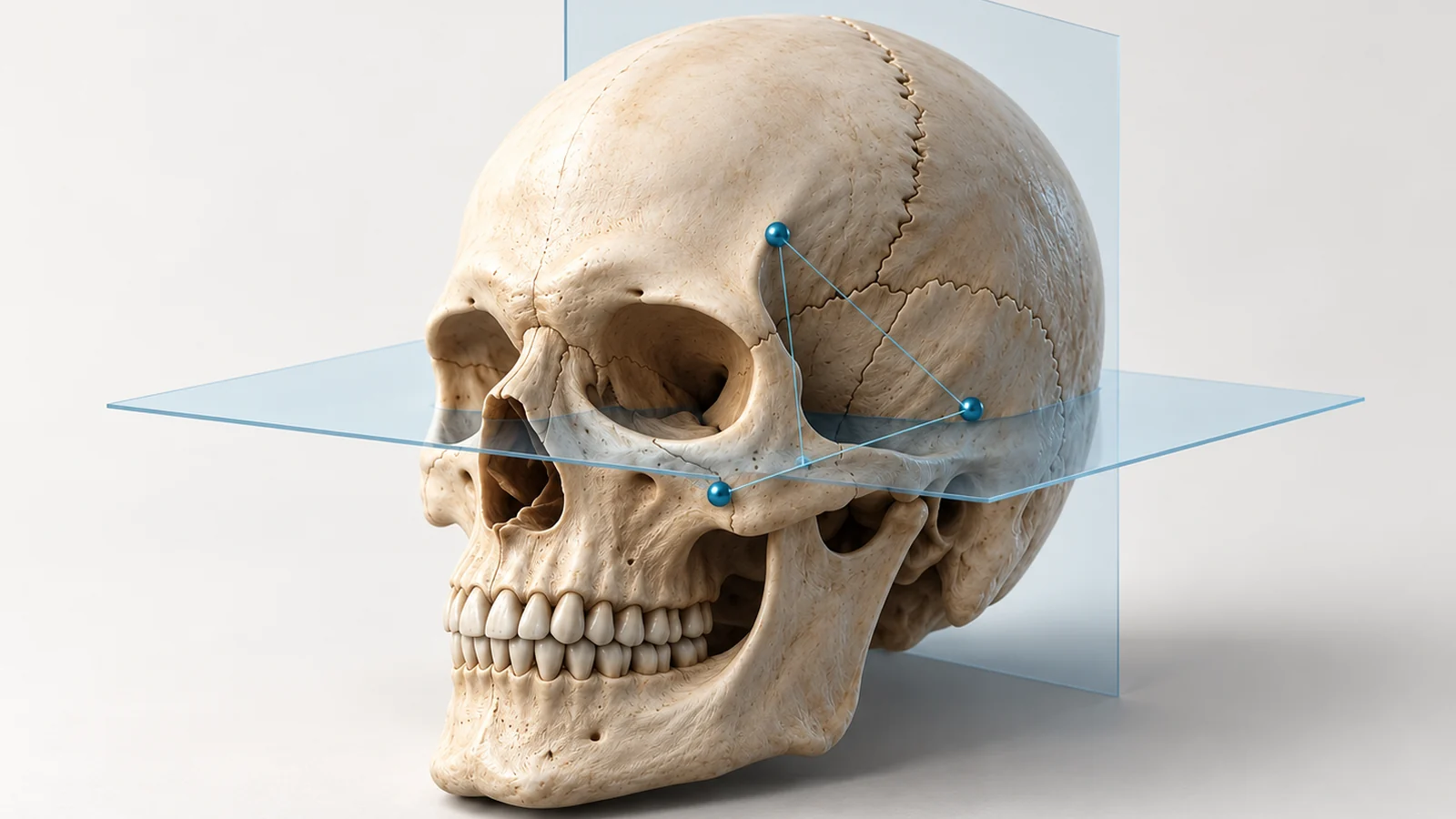
Measurements are made on the reconstructed 3D anatomy rather than on a single slice. Cranial indices, cephalometric angles from the subject's own volume, segment volumes, asymmetry and left-to-right comparison are all supported.
What is delivered
- A measurement table per subject, each value naming its method and units
- Repeat measurements of the same subject under the same protocol, with the observed spread reported beside every value
- Cohort summary tables and publication-quality figures
- Methods text describing the measurement protocol
Method and reporting
- Cranial index and cranial vault asymmetry index computed to the convention stated in the report, since published conventions differ in which diagonal is the divisor
- Surface-to-surface deviation reported as a distribution, not a single number: mean, root mean square and the 50th, 90th, 95th and 99th percentiles
What you provide
- De-identified imaging, or reconstructed models if you already hold them
- The measurement definitions your study will use, or a request that they be proposed and agreed first
- Any norm or reference set the results are to be compared against
How this is kept honest
Stated Conventions
Published definitions of an index often disagree. The report names the one used, and it is applied the same way across every subject.
Repeat Measurement
Every value carries the spread observed when the measurement is repeated under the same protocol.
Cited Reference Data
Every norm used is cited in the report. Where published sets disagree, both are presented separately and values from different populations are never averaged.
Frequently Asked
- Can measurements be compared against published norms?
- Yes, and the source of every norm is cited in the report. Where sets disagree, both are presented separately. International reference data is used as the basis; regional data is shown for comparison and does not drive a verdict.
- Who places the landmarks?
- Osteo3d places them and the placements are returned for your review before measurement. Where a study needs an independent observer for an agreement estimate, the observer is supplied by your institution and the protocol is designed around that.